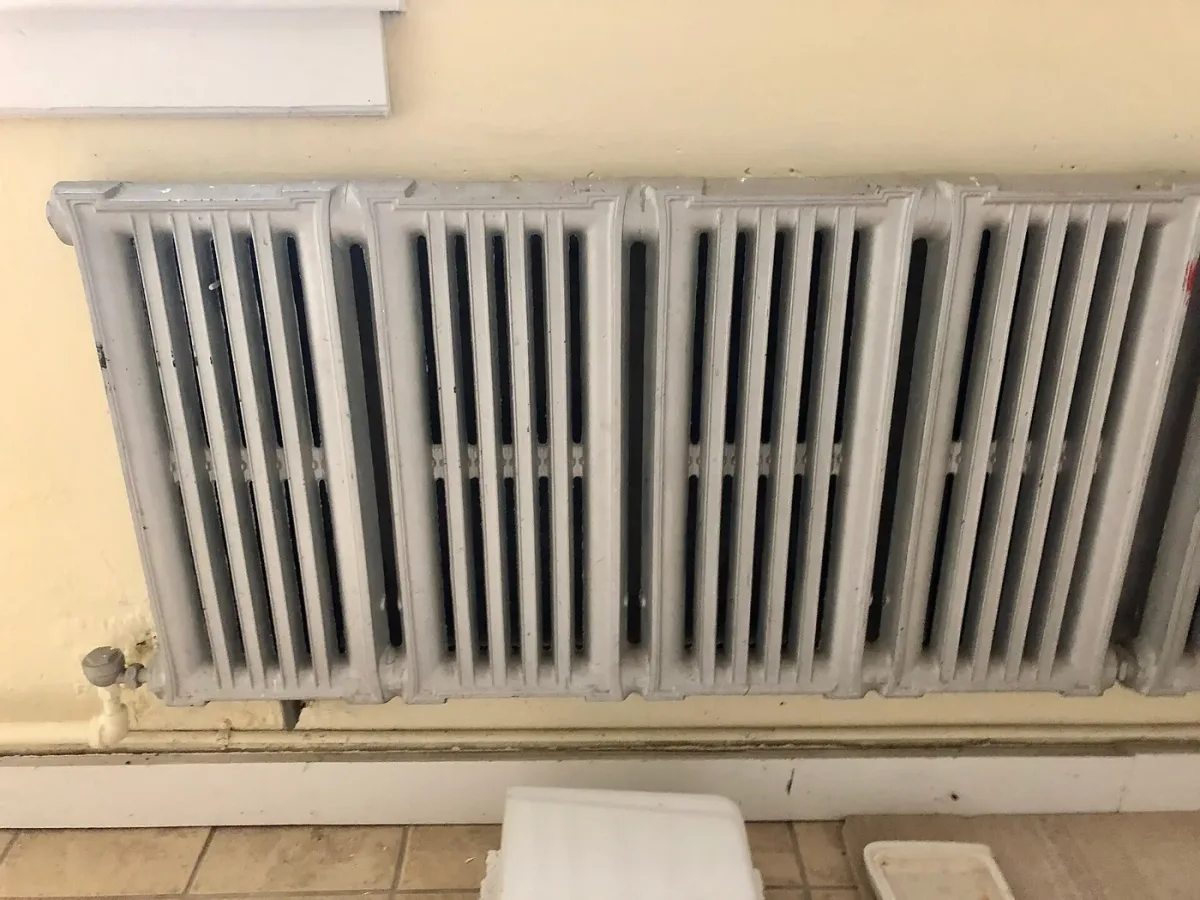
Boiler trouble in a Queens home can mean one cold room, an entire building without heat, or a safety problem that cannot wait for a routine appointment. Start with what you can observe safely. You do not need to open a boiler cabinet or guess which part failed to give a technician useful information.
If a carbon monoxide alarm sounds or you suspect a gas leak, leave the building and call 911 from a safe location. Do not use this guide as a repair checklist in that situation. CDC carbon monoxide guidance and Con Edison gas-safety guidance put evacuation and an emergency call ahead of a contractor visit.
First, decide what kind of problem you have
| What you notice | A safe observation | Next step |
|---|---|---|
| No heat throughout the home | Note whether hot water is also out and whether the thermostat appears on. | Tell the owner or manager if you are a tenant; arrange a boiler assessment if you control the system. |
| One radiator or one room stays cold | Compare other rooms without touching valves or opening equipment. | Report the affected room and whether the rest of the building has heat. |
| Water near the boiler | Note where you see water from a safe distance. Keep people away from wet electrical equipment. | Notify the property contact and request prompt professional assessment. |
| Repeated shutdown or unfamiliar noise | Record when it happens and whether heat is still reaching rooms. | Request service; do not keep resetting a unit to force it to run. |
| Gas smell or CO alarm | Do not investigate the appliance. | Leave, then call 911 from outside or another safe location. |
No heat can have more than one cause. A thermostat, control, pump, ignition component, distribution piping or radiator may be involved, depending on the system. Banging can come from different conditions in steam and hot-water systems. A symptom table is a way to describe the problem, not a diagnosis or a do-it-yourself repair instruction.
Tenants, owners and building managers have different first calls
A tenant who does not control the boiler should contact the landlord, superintendent or building manager and describe the affected rooms, timing and whether neighbors also lack heat. Do not enter a locked mechanical space or change boiler controls. If you own or manage the equipment, arrange a professional visit and prepare access to the boiler room and any affected rooms. For an urgent safety condition, call 911 first regardless of who controls the building.
In a multi-unit property, the distinction between “my radiator is cold” and “the whole building is cold” can change the scope of the visit. Ask another occupant only if it is safe and practical; do not delay a necessary service request while trying to survey every apartment. KOKA's Queens service area and boiler repair service pages explain the local service route once you are ready to book.
What to tell the technician before the visit
A useful service request has a timeline, not a guess at a part number. Tell the dispatcher when the problem began, whether it is constant or intermittent, which rooms or units are affected, and whether you noticed water, odors, an alarm or a shutdown message. If you know whether your building uses steam radiators or hot-water baseboard/radiators, say so; if not, leave the identification to the technician.
Share the boiler make and model only if the label is readily visible without opening panels. Have records of recent service and prior repairs ready if you have them. Explain whether the technician will need a superintendent, tenant, board representative or building staff member for access. If water is spreading or a safety alarm is active, tell the appropriate emergency responder or property contact immediately instead of waiting for a scheduled slot.
A proper diagnosis may require checking the boiler and the distribution side of the system. A cold radiator does not automatically mean the boiler itself needs replacement. Likewise, a wet floor does not identify which fitting or component has failed. Ask for the finding and proposed work in plain language before authorizing a repair.
Ready for a service assessment? See KOKA's boiler repair service or contact the team. For gas odor or a CO alarm, leave and call 911 first.
Why one repair quote may differ from another
A responsible estimate follows an inspection. The relevant factors are the system type, the actual failure, whether the part is available, access to the boiler and radiators, the condition of related piping or controls, and whether work beyond the boiler is needed. A diagnostic fee, labor, parts, emergency scheduling and any separately required work should be identified in the written scope.
Ask whether the quote includes diagnosis only or the completed repair. If a part must be ordered, ask what temporary condition the system will be left in and when the repair can be finished. If the proposal changes after the technician opens the system, ask for the revised scope and price before work continues. No universal dollar table can tell you the cost of your particular boiler from a noise or an age alone.
Repair or replace? Ask for the evidence, not a rule of thumb
A replacement recommendation should explain what failed, whether a safe repair is feasible, and what risks or recurring costs remain afterward. Compare the written repair scope with a separate replacement proposal that names the equipment, distribution work, controls, electrical or venting changes, and responsibilities for any required approvals. If the current problem is isolated and repairable, replacement is not automatically the right answer. If safety, severe deterioration or unavailable components make repair impractical, ask the contractor to explain why.
Age can inform that conversation but is not a standalone verdict. Avoid a blanket “replace after X years” rule, a fixed percent-of-new-cost threshold, or an efficiency claim without model and usage evidence. A technician's assessment and a complete written proposal are more useful than a generic chart.
When a service visit ends, what should you know?
Before the technician leaves, ask what was found, what was repaired, what was tested, and whether any work remains. Confirm how to operate the system normally, who should be contacted if the symptom returns, and whether a follow-up visit is needed. For a building-wide issue, the manager can pass a short status update to affected occupants rather than asking everyone to interpret the equipment themselves.
If you need to arrange a visit, start with the boiler repair service page. A written finding after inspection should clarify whether the issue is in the boiler, the controls or the heat distribution system.
Common questions
Can I reset the boiler if it shuts off?
Do not repeatedly reset a boiler to keep it running. Record any display message you can read without opening panels and tell the technician what happened. If you smell gas or a CO alarm sounds, leave and call 911 from a safe place instead of trying a reset.
Is a cold radiator always a boiler problem?
No. One cold room can call for a different investigation than building-wide loss of heat. Tell the property contact which rooms are affected and whether other occupants have heat. A technician can then check the boiler and distribution system rather than assuming one part is at fault.
Should I authorize a replacement over the phone?
Ask for an on-site assessment and a written explanation of the failure and options. A replacement proposal should account for equipment, related system work, access and approvals. If it is a safety emergency, follow emergency-response advice first; do not postpone evacuation to collect quotes.
What if I'm a tenant and the building has no heat?
Notify your landlord or building manager, record when heat stopped and which rooms are affected, and follow local reporting channels if the issue is not addressed. A tenant should not attempt work on a shared boiler. A gas smell or CO alarm is different: leave and call 911.
For ordinary boiler trouble in Queens, KOKA-TECH HVAC can discuss a visit and the next diagnostic step. Request boiler service or call 929-319-8010. Describe the symptom and property access situation; the repair recommendation comes after inspection.
Photo Credits:
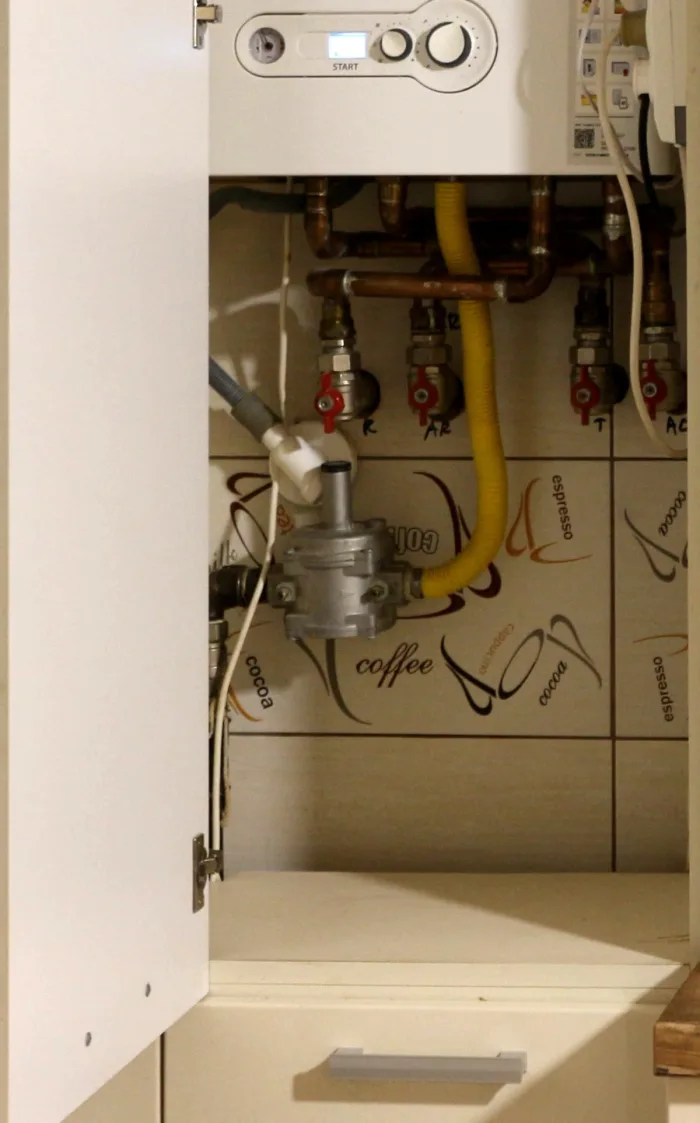
Residential boiler: Turbojet · CC BY-SA 4.0. Image adapted; licensed CC BY-SA 4.0. Illustrative equipment, not a KOKA job.

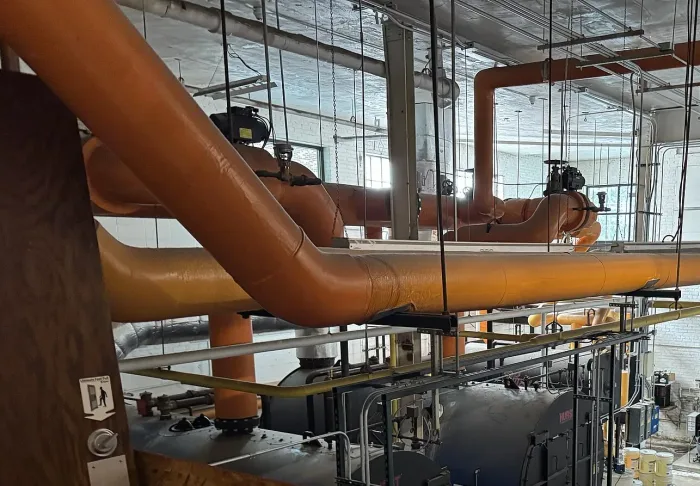
Piping photo: school boiler room, illustrating larger-building context; not a residential installation or a KOKA job.